Children companion hospital device concept
Context
Globulus was a final Bachelor's Interaction Design degree project, completed over 4 months, involving collaboration between ELISAVA Barcelona School of Design and Engineering and Teknon Clinical Center, one of the leading private healthcare institutions in Southern Europe for quality and medical care.
After different problem-finding sessions with Teknon directives, there was a need to understand how families with children perceive Teknon's emergency waiting area and what needed to be improved.


Research and discovery
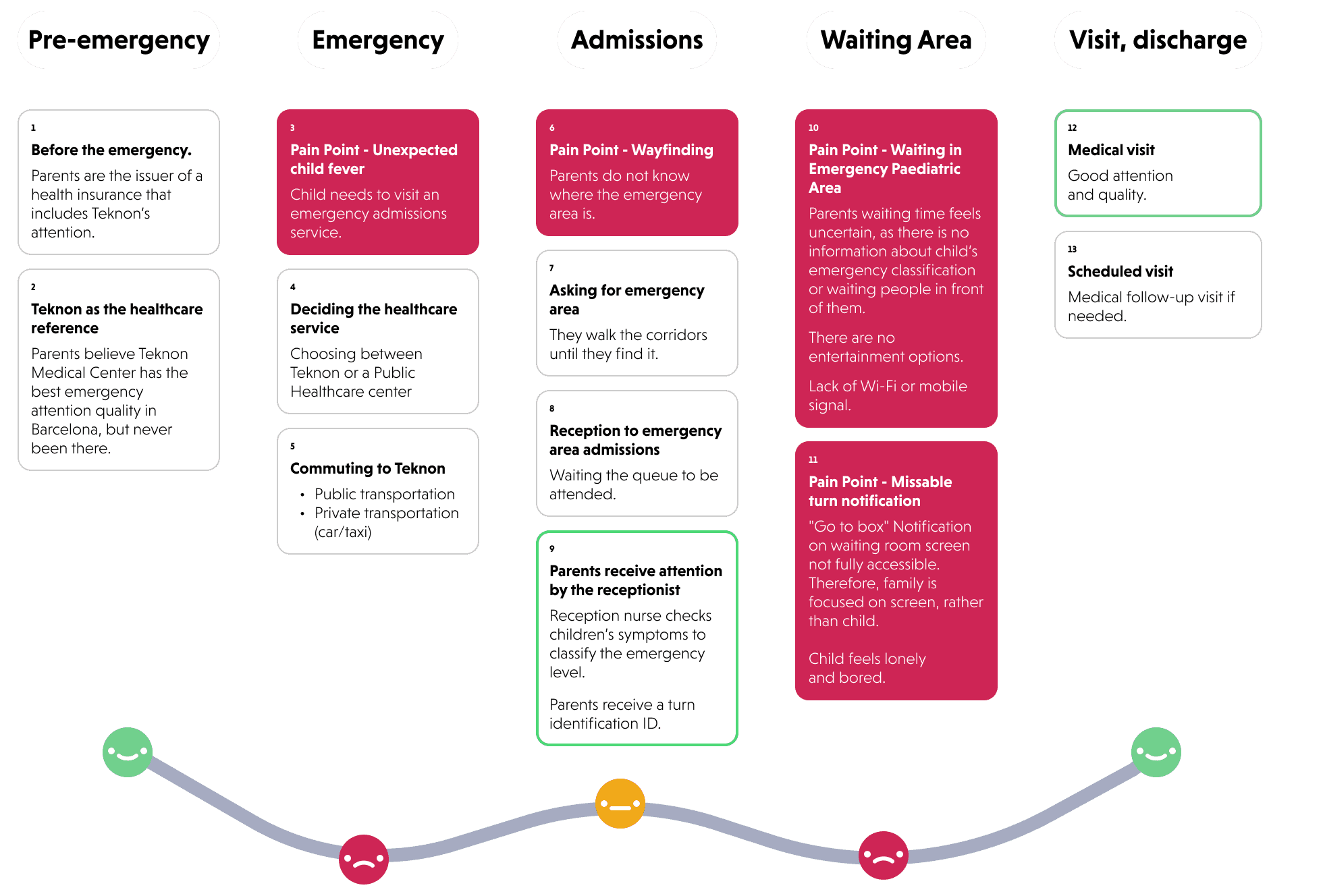
The project started with in-field qualitative research: in-depth ethnographical interviews with professionals and families in context, observations onsite on the paediatric waiting room, and an understanding of the user journey within the hospital context.
The main pain points identified were feelings of loneliness, boredom, and the lack of receiving information families needed on time.

From insight to concept
The moment with more restrictions and more pain points was the waiting time. Distraction was needed. Children felt lonely during the whole process, as parents needed to focus on the room's screen for updates.
As one of the interviewed doctors said, "Playfulness is key". Further than a renovation, the space needed a layer of imagination, and patients needed to feel accompanied.
After researching entertainment companies, light mapping exhibitions, popular toon styles, and toy-culture merchandising, it was possible to address those pain points by designing a device that combined on-site distractions while also delivering all the needed information.
Solution
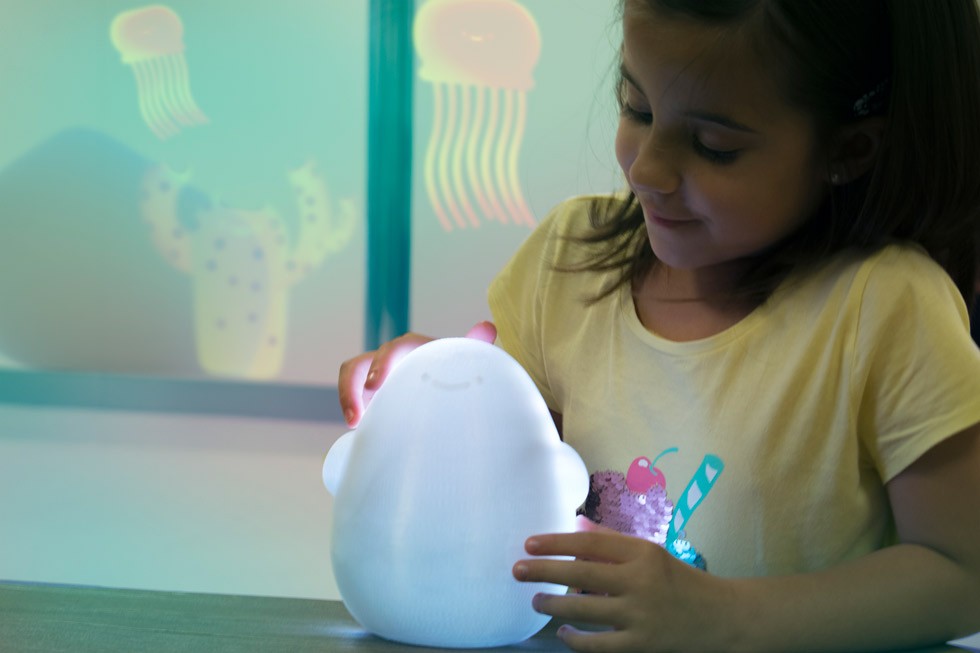
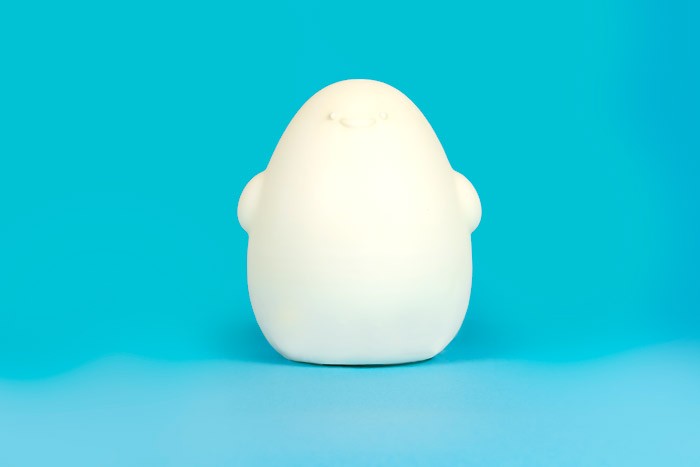
Globulus: an accessible patient interactive device with visual and haptic feedback. Its mission is to join children on their journey through emergency admissions. With Globulus, children can play and be distracted with interactive light projections in waiting areas.

Distraction aid
Children are surprised when they receive the Globulus upon entering the hospital, distracting them from their vulnerable situation.

Interactive exploration
Inspired by sick animals in the Mediterranean Ocean, children can find light projections, interact with them, and heal them with Globulus.
Information display
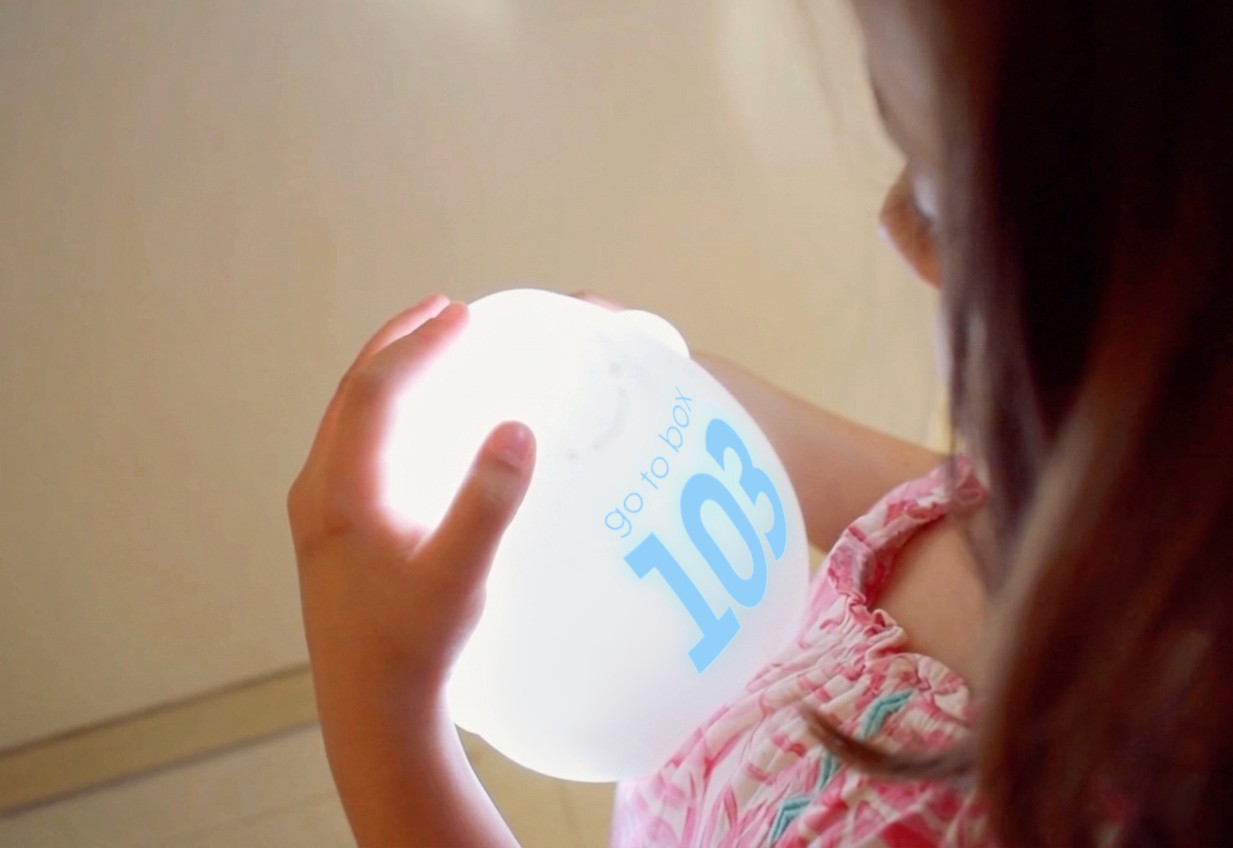
The device displays relevant notifications, such as the doctor's visit room number, using light and vibration.
Working prototype
The prototype was produced using ABS 3D Printing, an Arduino Nano, and a custom PCB with different sensors and components to generate accessible haptic and light feedback.
An interaction test – a small game where children drag viruses out of a sea-tomato character – was designed to test user's comfort space and required movements to play, in order to ensure Globulus accessibility during the interactive exploration.
Some design iterations were considered, such as adding a strap to prevent accidental drops or making Globulus arms bigger to grip it more comfortably.


Impact
Although Globulus was only a concept prototype, it represented a breakthrough in the hospital's culture on being patient-centred. The project highlighted the relevance and capabilities of user-centred design to Teknon Medical Center.
Production of Globulus did not proceed due to final misalignments between the school and the hospital. However, this collaboration has led to, at least, renovations in the paediatric emergency waiting area, impacting an estimated amount of13.300 patients yearly.
