Measuring the human impact of AI during medical visits
Situation and Tasks
Hospital Sant Joan de Déu piloted LAIA, an AI scribe that transcribes the consultation and drafts the clinical note, in pediatric outpatient clinics.
I led research, interaction design, and implementation management for LAIA, assessing whether AI improved patient-family interactions and overall visit quality, considering the interaction between clinician and family, and the quality of what ended up written down.
Six months, 40 clinicians across hematology, rheumatology and general pediatrics, 197 documented visits. The results were published in Medicina Clínica, where I figured as the second author.

The design process starts with collaboration among the team of professionals who will use LAIA and the engineers who will prepare the pilot test. During a co-creative session, we determine the user flow and the interactions to make its use non-invasive during the whole visit; the technical constraints, and how the data needs to be managed to protect patient's privacy.


User Flow
LAIA's user flow is adapted to focus on clinicians' work and documentation tasks. The interactions are positioned to cause the least friction between users and professionals.
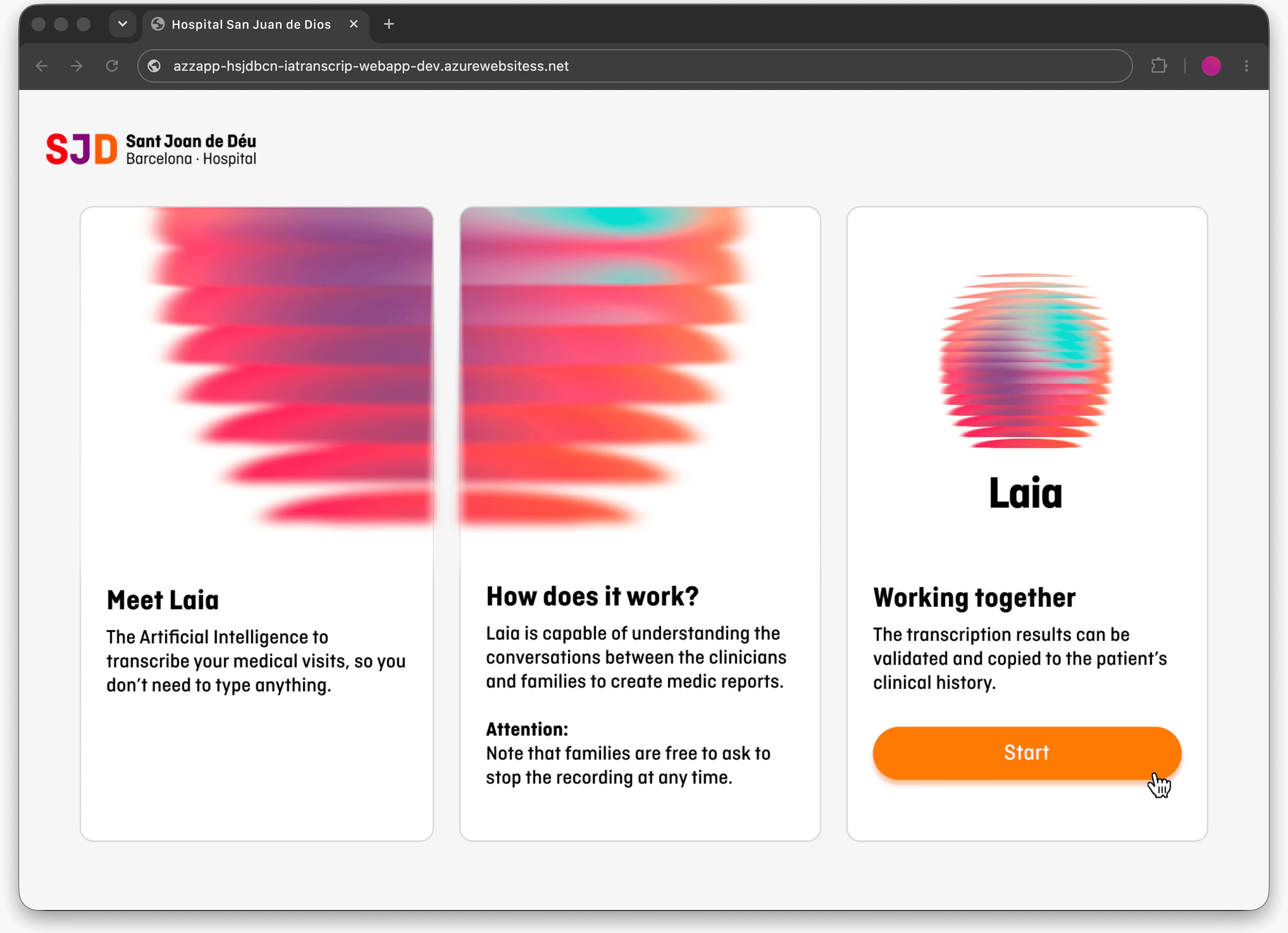

Onboarding
When a new recording starts, a simple screen with information related to how to use it, and how to tell patients that the conversation is being recorded, and it is their right to stop the recording at any moment.

Before the transcript

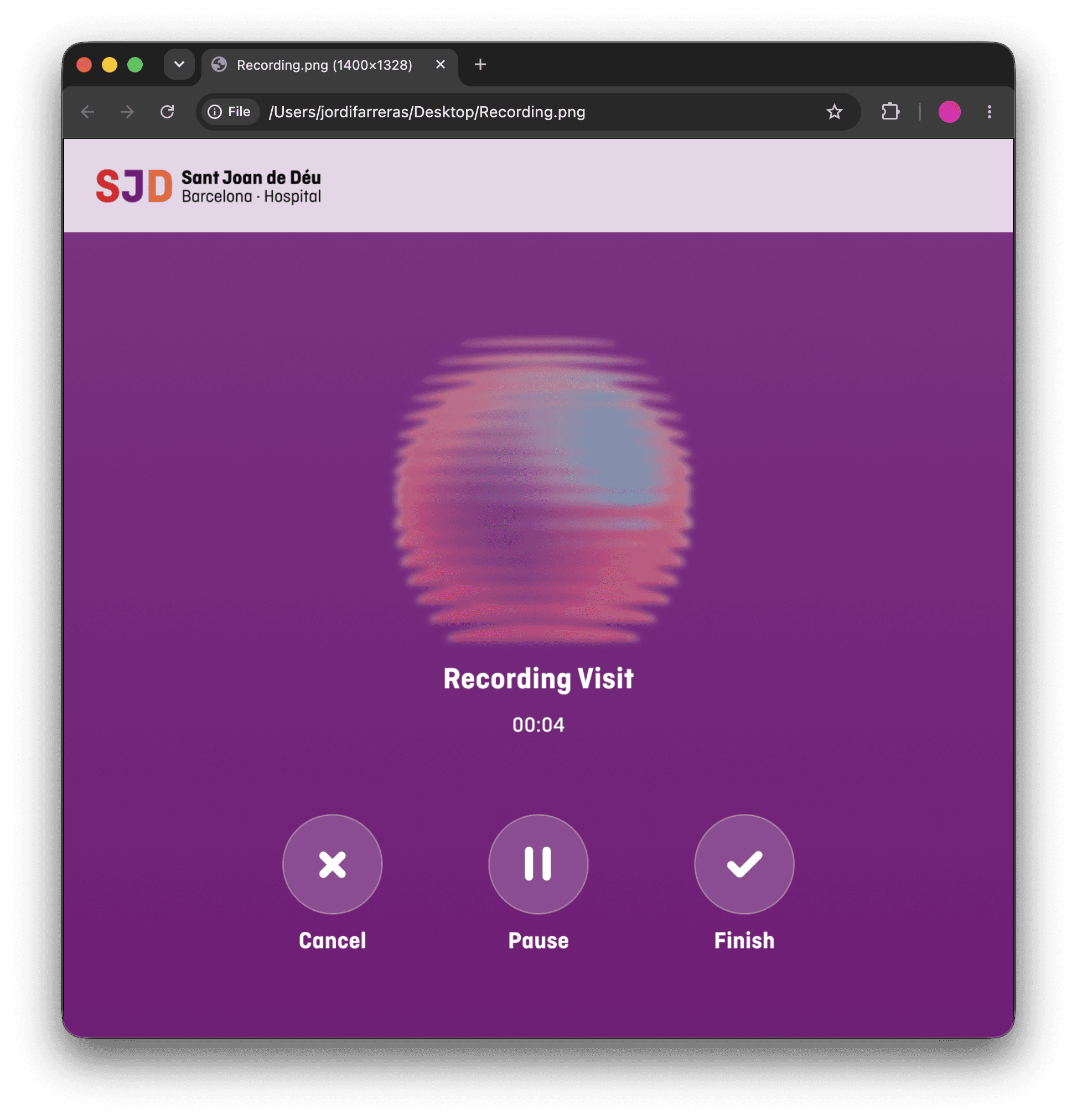
During the transcript

Pausing the transcript
Review screen
A simple layout with the main stages of the visit, with pre-filled text fields with the information LAIA understood, organizes the clinical information. On this screen, the professional can correct any errors and validate the information. Once finished, the whole text is copied and ready to paste into the Integrated Clinical History Software.


To measure LAIA's impact on visit quality, the research combined three strands.

In-depth interviews with families about their perception of AI usage
The interviews explored how families felt about AI being present during the visit, what they wanted to be told beforehand, and their privacy concerns. AI-generated storyboards were used to make the scenario concrete.

Defining quality parameters to measure AI's impact during observations
Each segment of the consultation was defined and timed: case history, examination, results, next steps, family comments, direct eye contact, and time spent on the computer. These definitions made the comparison possible.

Paired observations and blinded review of the notes
Thirty timed observations, fifteen with LAIA and fifteen without. Separately, three pediatricians blind to the condition scored thirty clinical notes against a rubric based on the validated mPDQI-9.

Results and Impact
Direct eye contact with the child and family rose from a median 78.6% of visit time to 95.7% (p<0.001). Families stated the clinician was more present, and clinicians described being freed from typing while trying to listen. Visits ran 25.7 minutes against 21.9, a difference that did not reach significance, so LAIA did not measurably lengthen the consultation.
The notes changed too. Overall documentation quality rose from 17 to 23 out of 25 (p=0.008). The clearest single finding: notes written with LAIA recorded what had actually been explained to the family in 80% of cases, against 20% without it (p=0.003). Clinicians tend to omit what feels obvious in the room. That omission is exactly what matters months later.
Concerns and future
The consultation improved. Adoption did not follow. Only 12 of the 40 trained clinicians kept using LAIA, and six never used it at all. Two-thirds hit technical problems, most often information landing in the wrong field and transcription errors on drug names and specialist vocabulary. Reviewing and correcting each note took 33% to 38% of the visit time.
While patients and families welcomed LAIA, the key to widespread adoption lies with professionals. Strengthening LAIA’s vocabulary and comprehension will reduce professionals' reluctance and will encourage its use during medical visits.
